



Oil prices are so high that CO2 emissions from fossil fuels are dropping
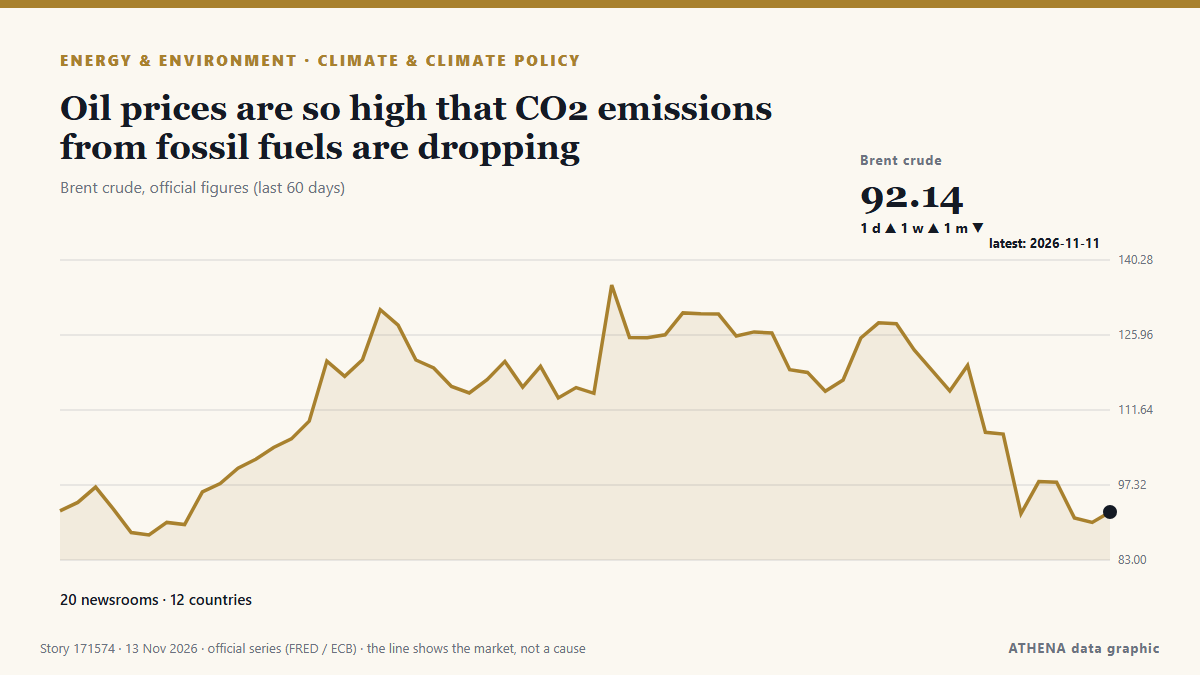
It's not quite a victory for humanity's transition to renewables. from Science News
Reported independently by 20 outlets in 12 countries since 9 Nov, first by Yale E360; coverage is fading. ATHENA rates the risk low (1.3/10), driven mainly by the severity of the harm described and its geographic and sector reach. Confidence is 91% (high), with 20 independent outlets corroborating it and an average source reliability of 73%. Outlets by country: United States (5), United Kingdom (3), France (2). Coverage: 9 Nov to 13 Nov, 89 hours.
Why it matters: This tracker follows the events behind energy prices — OPEC+ decisions, supply disruptions, conflicts on shipping routes and demand — not the prices themselves.
What changed: 1 new report in the 24 hours to 13 Nov.
First reported as: As War Roils Energy Markets, China Sees Its Emissions Drop
AutomatedSelected, grouped and scored by ATHENA's published method from 20 independent outlets. The headline is the outlet's own; ATHENA's sentences follow fixed patterns - no generative AI writes them. How it works →
How to read this page
- What you are reading
- 20 outlets in 12 countries reported this event. The reports below are listed in the order they appeared; each headline opens the original article. ATHENA writes none of the reports.
- Our reading
- For the record — The reports describe a completed, domestic, commercial or personal matter. We list it so you can see who reported it and when. We are not tracking a risk of wider conflict here.
- How much evidence
- Fair Several independent outlets agree, but the picture could still change.
After repeats, off-topic items and stale reports are removed, 17 of the 20 listed reports are counted; 100% of the headlines match the event.
- What this does not mean
- ATHENA measures how an event is reported, not whether it is true. This is not a forecast, a judgement on who is right, or advice.
- What would change it
- Reports from other independent outlets showing a different development, or a firm confirmation or denial from an official source.
Reading R2 · refreshed with every update of this page. ATHENA has not yet published a track record for these readings; when it does, it will be linked here.
At a glance
Selected, scored and written by ATHENA's published methodology. No editor intervenes in individual events. How this is produced ›
| 09 Nov 15:06 UTC | 1 |
|---|---|
| 09 Nov 21:06 UTC | 8 |
| 10 Nov 03:06 UTC | 2 |
| 10 Nov 09:06 UTC | 4 |
| 10 Nov 15:06 UTC | 2 |
| 10 Nov 21:06 UTC | 1 |
| 11 Nov 03:06 UTC | 1 |
| 11 Nov 09:06 UTC | 0 |
| 11 Nov 15:06 UTC | 0 |
| 11 Nov 21:06 UTC | 0 |
| 12 Nov 03:06 UTC | 0 |
| 12 Nov 09:06 UTC | 0 |
| 12 Nov 15:06 UTC | 0 |
| 12 Nov 21:06 UTC | 0 |
| 13 Nov 03:06 UTC | 1 |
| 09 Nov 16:23 UTC | 0.0 |
|---|---|
| 10 Nov 02:41 UTC | 0.9 |
| 13 Nov 08:30 UTC | 1.3 |
Why these numbers
Importance
Risk
Confidence
The reporting — who reported it, and when
headline as published · opens the original- Yale E360 · United StatesAs War Roils Energy Markets, China Sees Its Emissions Drop
- Science News · United StatesFossil fuel emissions are down in 2026. Green energy isn’t the reason
- ABC News Australia · AustraliaRenewables and Iran war help drive fall in global fossil fuel emissions
- Carbon Brief · United KingdomAnalysis: Fossil-fuel CO2 emissions set to dip in 2026 as Iran conflict hits oil use
- Free Malaysia Today · MalaysiaScientists expect global fossil fuel emissions to ease this year
- Oman Observer · OmanFossil fuel emissions fall due to Iran war, renewables:
- Le Monde (English) · FranceFossil fuel-related CO₂ emissions show slight global drop, an encouraging but insufficient sign
- Gulf News · United Arab EmiratesFossil fuel emissions fall due to Iran war, renewables: research
- The Straits Times · SingaporeFossil fuel emissions fall due to Iran war, renewables: Research
- DW English · GermanyIran war oil shock drives dip in global emissions, study shows
- France 24 English · FranceFossil fuel emissions set to fall for first time since Covid, research shows
- TRT World · TurkeyScientists link Iran war to lower fossil fuel emissions in 2026
- Guardian Environment · United KingdomSlight fall in carbon emissions from fossil fuels as Iran war drives renewables push
- Indian Express · IndiaCO2 emissions from fossil fuels projected to decline in 2026: Study
- OilPrice.com · United KingdomIran War Set to Drive A Drop in Global Fossil Fuel Emissions in 2026
- Ars Technica · United StatesHigh oil prices have led to a dip in global carbon emissions
- Fast Company · United StatesThe Iran War led to a decline in carbon emissions in 2026. It doesn’t mean we’ve turned a corner on fossil fuels
- Deccan Herald · IndiaOil prices are so high that CO2 emissions from fossil fuels are dropping
- The Jerusalem Post · IsraelIran war, Hormuz disruptions drive first drop in global fossil fuel emissions since 2020 - report
- Canary Media · United StatesThe Iran war will cause global fossil fuel emissions to fall