



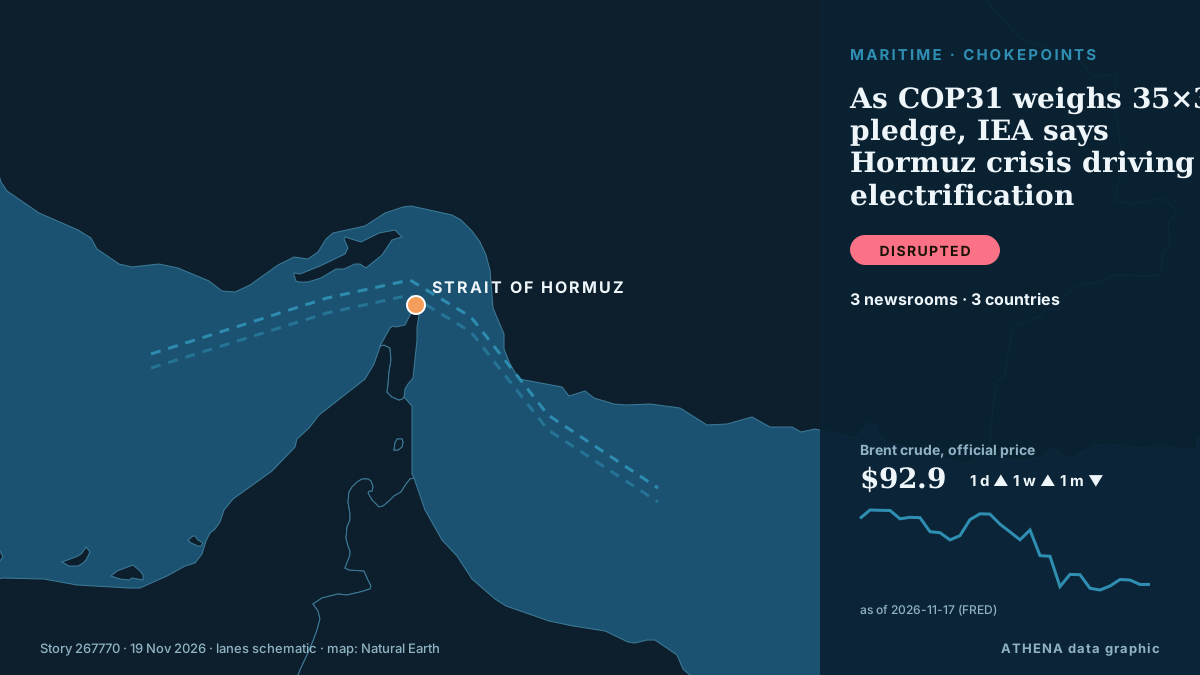
As COP31 weighs 35×35 pledge, IEA says Hormuz crisis driving electrification
The report estimates that a planned transition away from fossil fuels and into renewables can add energy jobs and cut energy bills. from Climate Home News
Reported independently by 3 outlets in 3 countries since 19 Nov, first by Shafaq News (English); coverage is fading. ATHENA rates the risk moderate (2.4/10), driven mainly by the severity of the harm described and the quality of the evidence. Confidence is 68% (high), with 3 independent outlets corroborating it and an average source reliability of 70%. Outlets by country: Iraq (1), United Kingdom (1), United States (1). Coverage: 19 Nov to 19 Nov, 10 hours.
Why it matters: The Strait of Hormuz links the Persian Gulf to the open ocean. Roughly a fifth of the oil consumed worldwide passes through it, so attacks on shipping or threats to close it move energy prices and insurance costs within hours.
What changed: 3 new reports from 3 outlets in the 24 hours to 19 Nov.
First reported as: IEA: Hormuz disruptions cut oil supply by 2.8bn barrels
AutomatedSelected, grouped and scored by ATHENA's published method from 3 independent outlets. The headline is the outlet's own; ATHENA's sentences follow fixed patterns - no generative AI writes them. How it works →
How to read this page
- What you are reading
- 3 outlets in 3 countries reported this event. The reports below are listed in the order they appeared; each headline opens the original article. ATHENA writes none of the reports.
- Our reading
- No reading yet — We are not giving a reading yet: too few independent outlets or countries have reported it; too few reports remain once repeats and stale items are removed. We prefer to say nothing than to say it on thin evidence.
- How much evidence
- Limited Treat this page as an early report.
After repeats, off-topic items and stale reports are removed, 3 of the 3 listed reports are counted; 100% of the headlines match the event.
- What this does not mean
- ATHENA measures how an event is reported, not whether it is true. This is not a forecast, a judgement on who is right, or advice.
- What would change it
- Reports from other independent outlets showing a different development, or a firm confirmation or denial from an official source.
Reading R2 · refreshed with every update of this page. ATHENA has not yet published a track record for these readings; when it does, it will be linked here.
At a glance
Selected, scored and written by ATHENA's published methodology. No editor intervenes in individual events. How this is produced ›
| 19 Nov 07:23 UTC | 1 |
|---|---|
| 19 Nov 08:23 UTC | 0 |
| 19 Nov 09:23 UTC | 0 |
| 19 Nov 10:23 UTC | 0 |
| 19 Nov 11:23 UTC | 0 |
| 19 Nov 12:23 UTC | 1 |
| 19 Nov 13:23 UTC | 0 |
| 19 Nov 14:23 UTC | 0 |
| 19 Nov 15:23 UTC | 0 |
| 19 Nov 16:23 UTC | 0 |
| 19 Nov 17:23 UTC | 1 |
| 19 Nov 16:57 UTC | 1.0 |
|---|---|
| 19 Nov 20:30 UTC | 2.4 |
| 19 Nov 20:30 UTC | 2.4 |
Why these numbers
Importance
Risk
Confidence
The reporting — who reported it, and when
headline as published · opens the original- Shafaq News (English) · IraqIEA: Hormuz disruptions cut oil supply by 2.8bn barrels
- Climate Home News · United KingdomAs COP31 weighs 35×35 pledge, IEA says Hormuz crisis driving electrification
- Oil & Gas Journal · United StatesIEA sees potential for looser oil, LNG markets after Hormuz crisis