



Microsoft Azure flaw exploited to steal customers' API credentials
Microsoft is warning customers that a security vulnerability in Azure API Management (APIM) Classic tiers was exploited to steal stored API credentials, with Norwegian authorities linking the flaw to… from BleepingComputer
What changed 4 new reports from 4 outlets in the last 24 hours.
See the sources ›Evidence: Limited
Reported independently by 4 outlets in 2 countries since 23 Nov, first by The Record (Recorded Future News); coverage is fading. ATHENA rates the risk elevated (4.0/10), driven mainly by the severity of the harm described and the quality of the evidence. Confidence is 64% (moderate), with 4 independent outlets corroborating it and an average source reliability of 79%. Outlets by country: United States (3), India (1). Coverage: 23 Nov to 24 Nov, 19 hours.
Why it matters: Technology and cyber developments shape security, competition and the rules of digital life.
What changed: 4 new reports from 4 outlets in the 24 hours to 24 Nov.
First reported as: Norway says hackers exploited Microsoft security flaw to attack energy firms Equinor, Skagerak Energi
AutomatedSelected, grouped and scored by ATHENA's published method from 4 independent outlets. The headline is the outlet's own; ATHENA's sentences follow fixed patterns - no generative AI writes them. How it works →
How to read this page
- What you are reading
- 4 outlets in 2 countries reported this event. The reports below are listed in the order they appeared; each headline opens the original article. ATHENA writes none of the reports.
- Our reading
- For the record — The reports describe a completed, domestic, commercial or personal matter. We list it so you can see who reported it and when. We are not tracking a risk of wider conflict here.
- How much evidence
- Limited Treat this page as an early report.
After repeats, off-topic items and stale reports are removed, 4 of the 4 listed reports are counted; 100% of the headlines match the event.
- What this does not mean
- ATHENA measures how an event is reported, not whether it is true. This is not a forecast, a judgement on who is right, or advice.
- What would change it
- Reports from other independent outlets showing a different development, or a firm confirmation or denial from an official source.
Reading R2 · refreshed with every update of this page. ATHENA has not yet published a track record for these readings; when it does, it will be linked here.
At a glance
Selected, scored and written by ATHENA's published methodology. No editor intervenes in individual events. How this is produced ›
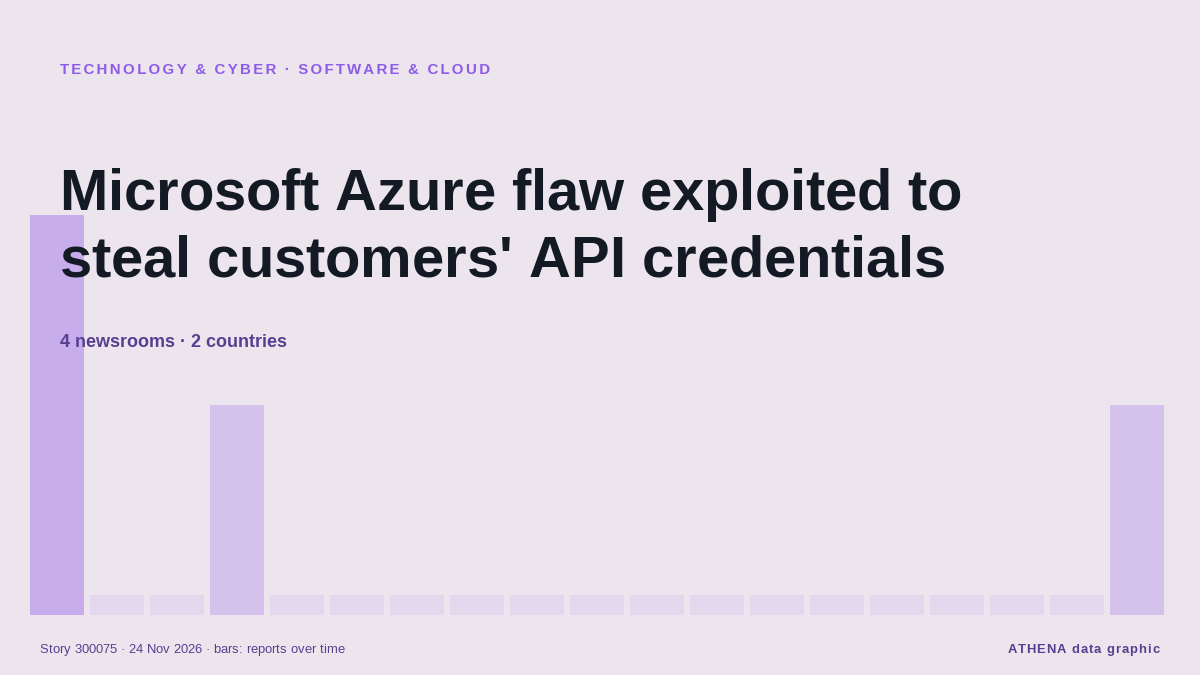
| 23 Nov 15:45 UTC | 2 |
|---|---|
| 23 Nov 16:45 UTC | 0 |
| 23 Nov 17:45 UTC | 0 |
| 23 Nov 18:45 UTC | 1 |
| 23 Nov 19:45 UTC | 0 |
| 23 Nov 20:45 UTC | 0 |
| 23 Nov 21:45 UTC | 0 |
| 23 Nov 22:45 UTC | 0 |
| 23 Nov 23:45 UTC | 0 |
| 24 Nov 00:45 UTC | 0 |
| 24 Nov 01:45 UTC | 0 |
| 24 Nov 02:45 UTC | 0 |
| 24 Nov 03:45 UTC | 0 |
| 24 Nov 04:45 UTC | 0 |
| 24 Nov 05:45 UTC | 0 |
| 24 Nov 06:45 UTC | 0 |
| 24 Nov 07:45 UTC | 0 |
| 24 Nov 08:45 UTC | 0 |
| 24 Nov 09:45 UTC | 1 |
| 23 Nov 23:10 UTC | 3.6 |
|---|---|
| 24 Nov 04:13 UTC | 2.6 |
| 24 Nov 06:02 UTC | 3.8 |
| 24 Nov 10:44 UTC | 4.0 |
Why these numbers
Importance
How widely and how prominently the story is reported.
Risk
What the reports describe, scored for possible harm. It is not a forecast.
Confidence
How well independent outlets support the story.
Shown as 64% (calculated 69%): the evidence reading is Limited, so confidence is held at moderate.
The reporting — who reported it, and when
headline as published · opens the original- The Record (Recorded Future News) · United StatesNorway says hackers exploited Microsoft security flaw to attack energy firms Equinor, Skagerak Energi
- SecurityWeek · United StatesAzure Flaw Exploited to Target Secrets at Norwegian Energy Firms
- BleepingComputer · United StatesMicrosoft Azure flaw exploited to steal customers' API credentials
- The Hacker News · IndiaMicrosoft Fixes Azure API Management Classic Flaw as Actor Targets Customer Secrets